This Week in Abu Dhabi: The Future of Mobility Is Already Here
This Week in Abu Dhabi: The Future of Mobility Is Already Here
Something important happened in Abu Dhabi this week and it may shape how people across the region move, work, and live for the next decade.
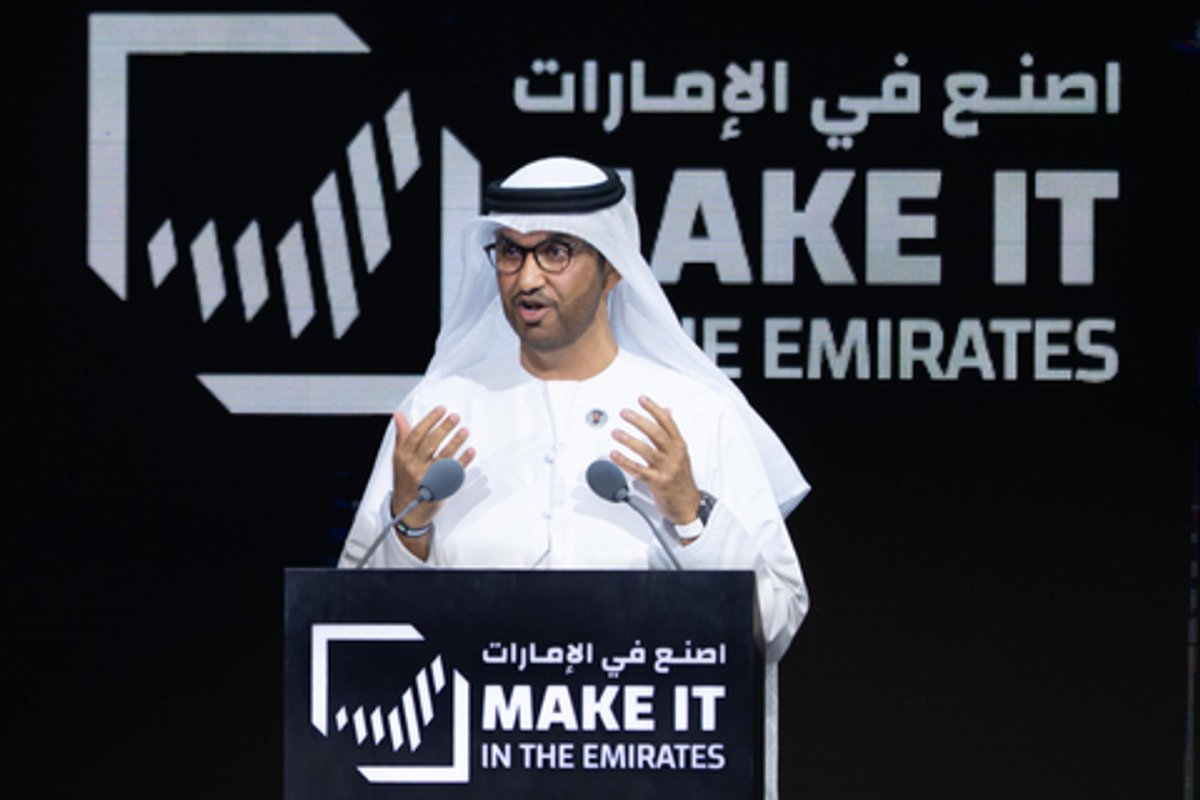
At Make it in the Emirates 2026, the UAE’s largest industrial gathering, smart mobility became one of the clearest signals of where the country is heading next. Electric transport, AI-powered manufacturing, autonomous systems, connected infrastructure, and locally built mobility technology are no longer ideas for the future. They are becoming part of the UAE’s industrial reality.
The numbers alone tell the story.
The UAE’s industrial sector has now reached AED 200 billion in output, marking a 70% rise since 2021. Exports climbed to a record AED 262 billion, while a new AED 180 billion procurement initiative aims to localise more than 5,000 industrial products across strategic sectors.
One of the biggest sectors on that list? Smart mobility.
But what exactly does that mean?
It means the UAE does not simply want to buy future transportation technology. It wants to design it, build it, test it, manufacture it, and eventually export it.
This week made that ambition visible.
The Abu Dhabi Investment Office partnered with Empala to create an integrated electric mobility platform designed to accelerate the transition toward cleaner transport systems. Meanwhile, ROX Motors announced plans to launch its first advanced AI manufacturing centre in the UAE in 2026, targeting production of 300,000 vehicles annually by 2030. The project alone is expected to contribute AED 30 billion to GDP.
That is not experimentation anymore. That is industrial scale.
The UAE also introduced a new AED 1 billion National Industrial Resilience Fund, placing artificial intelligence at the centre of production, logistics, and planning systems. In simple terms, factories are becoming smarter, transport networks are becoming more connected, and mobility is becoming part of a much larger economic transformation.
And it is not only happening inside factories.
Dubai’s Roads and Transport Authority recently launched a smart bus station at Mall of the Emirates equipped with 24-hour digital services, live crowd monitoring, and interactive passenger systems. Across MIITE, visitors saw locally engineered technologies including the UAE-designed “Theeb” 4x4, autonomous patrol robots, electric delivery systems, and even air taxi developments connected to the SAVI ecosystem.
The message was clear: mobility in the UAE is moving beyond roads and vehicles. It is becoming an ecosystem powered by data, automation, and intelligent infrastructure.
Globally, smart mobility is one of the fastest-growing industrial sectors. Countries around the world are competing to lead in electric vehicles, autonomous systems, AI logistics, and clean transport infrastructure. The UAE appears determined to become part of that production chain as a manufacturing and innovation hub.
That raises interesting questions for the future.
Will the UAE become the Middle East’s centre for electric vehicle manufacturing?
Could autonomous public transport become normal faster here than anywhere else?
What happens when AI begins managing traffic, logistics, deliveries, and urban movement in real time?
And perhaps most importantly: can smart mobility help build a more sustainable economy beyond oil?
The UAE seems to believe the answer is yes.
For years, conversations about the future focused on finance, tourism, and real estate.
Today, another identity is emerging around advanced industry, intelligent infrastructure, and next-generation mobility.
Barbara Cardilli- Motorsport & Lifestyle Expert
ImageCredit: Make it In the Emirates