Formula 1’s $200 Million Detour: Why Bahrain and Saudi Arabia Are Still Betting Big on Speed
Formula 1’s $200 Million Detour: Why Bahrain and Saudi Arabia Are Still Betting Big on Speed
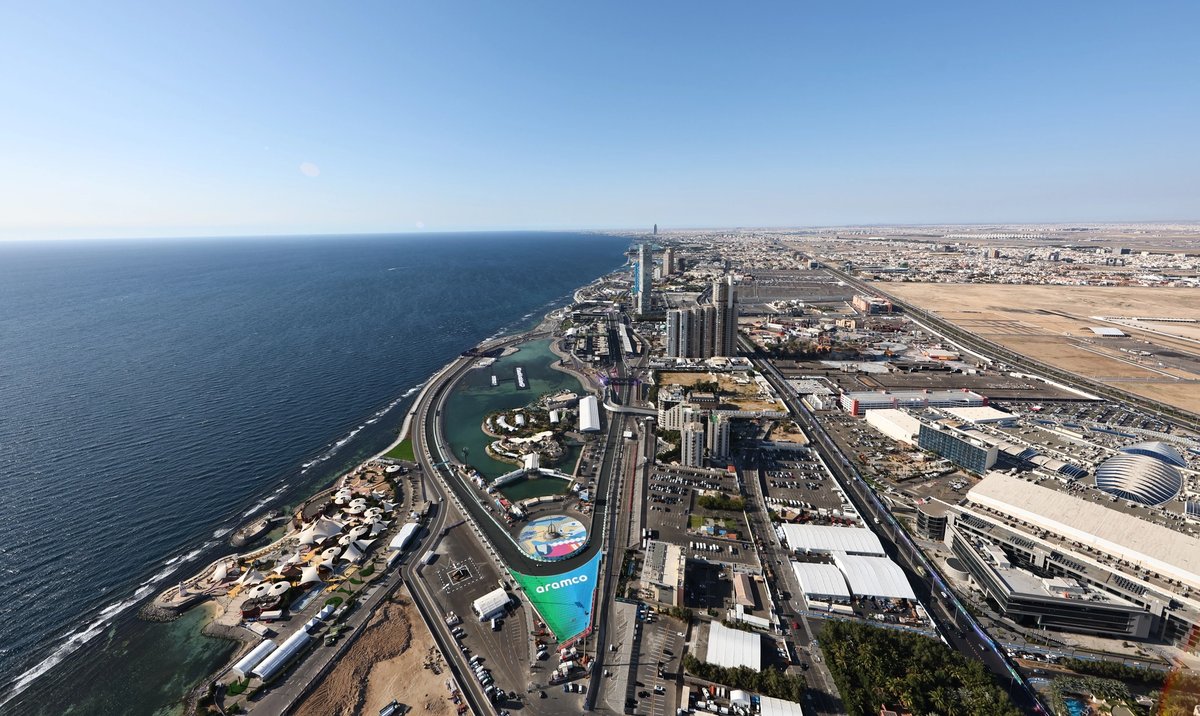
Formula One’s decision to cancel its April races in Bahrain and Saudi Arabia sent shockwaves through motorsport and global business circles alike. The Bahrain Grand Prix, scheduled for April 10–12, and the Saudi Arabian Grand Prix in Jeddah, planned for April 17–19, were both called off amid escalating regional tensions.
On paper, it looks like a costly disruption.
It reveals just how strategically important Formula 1 has become to the Gulf’s economic transformation.
Bahrain and Saudi Arabia together pay an estimated $115 million annually in hosting fees alone for their Formula 1 races. But the real story is far bigger than race-day economics. According to Guggenheim Partners, the cancellations could cost Formula One nearly $190–$200 million in revenue and around $80 million in EBITDA through lost promoter fees, sponsorship activations, hospitality spending, tourism, and broadcast value.
And yet, despite the financial hit, the Gulf’s long-term commitment to Formula 1 remains firmly intact.
To understand why, you need to understand what the region has been building.
Since 2021, Saudi Arabia has invested more than $6 billion into sports and entertainment as part of Vision 2030 a deliberate strategy to diversify its economy away from oil, create new industries, attract global tourism, and reposition the Kingdom as a premium international destination.
Formula 1 sits at the centre of that ambition.
The Bahrain Grand Prix alone contributes roughly $100 million annually to the local economy through hospitality, aviation, tourism, corporate travel, and business activity. For Gulf governments, these races are not simply sporting events. They are economic engines, branding platforms, and geopolitical statements rolled into one.
That is why the cancellation matters beyond the paddock.
For Formula One teams, the disruption creates an unusual five-week gap between the Japanese Grand Prix on March 29 and the Miami Grand Prix weekend beginning May 1. Teams adapting to sweeping technical regulation changes and new-generation cars were expecting critical track time in Bahrain and Saudi Arabia.
Instead, they lose two race weekends, six practice sessions, and a significant amount of real-world performance data.
Ironically, the cancellations also create a hidden advantage. Teams now gain additional simulator and development time behind closed doors, giving engineers more opportunities to refine upgrades before returning to competition in Miami.
Operationally, the effects are already visible. Several teams have encountered logistical disruptions, including rerouted charter flights due to restricted regional airspace.
Financially, however, Formula One remains resilient.
The championship generated approximately $3.9 billion in revenue in 2025 and reported operating income of around $632 million. While a $200 million setback is substantial, it is still manageable for a sport that has become one of the fastest-growing global entertainment properties under Liberty Media.
More importantly, the Gulf’s investment strategy has not changed.
Bahrain’s hosting agreement runs through 2036, while Saudi Arabia’s contract extends until 2030. Saudi Arabia is already developing the next phase of its motorsport ambitions through Qiddiya City — a purpose-built entertainment and motorsport megaproject expected to host the Saudi Grand Prix between 2027 and 2029.
This is what many headlines miss.
These are not short-term event deals. They are sovereign-level commitments tied directly to economic transformation strategies measured in decades, not race calendars.
The Gulf has repeatedly demonstrated its ability to build world-class infrastructure at extraordinary speed. From entertainment districts to mega tourism projects and sporting venues, the region has used global events as catalysts for broader economic positioning.
One cancelled race weekend does not derail a vision of that scale.
If anything, it reinforces how valuable Formula 1 has become not just as a sport, but as a geopolitical and economic asset.
This is the business of Formula 1, where speed meets strategy.
Barbara Cardilli – Motorsport & Lifestyle Expert
Image Credit: Cristiano Barni
Instagram